How a Norweco Singulair Green System Supports Cleaner Effluent
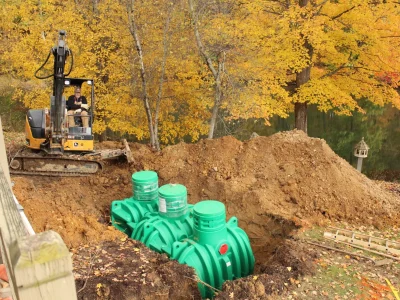
Wastewater treatment is easy to ignore when everything is working. Toilets flush, sinks drain, and the landscape gives no sign of what is happening below grade. Yet anyone who has dealt with a failing septic system knows how quickly that hidden infrastructure becomes a very visible problem. Odors surface. Wet spots appear. Drains slow down. More important, poorly treated wastewater can move into soil and groundwater long before a homeowner notices anything unusual.
That is where advanced onsite treatment systems earn their keep. A conventional septic tank does one job well, which is separating solids from liquids and giving wastewater time to settle. But settling alone is not enough in many settings. Small lots, challenging soils, waterfront properties, and regions with tighter discharge requirements often need a higher level of treatment. The Norweco Singulair Green system is designed for that gap between basic septic handling and the cleaner effluent that sensitive sites demand.
The real value of a system like this is not marketing language or a nameplate on the lid. It is what comes out of the treatment train, how consistently it performs, and how well it handles the everyday reality of residential wastewater, which is never as neat and predictable as a brochure suggests.
What cleaner effluent actually means
When installers, regulators, and service professionals talk about cleaner effluent, they are usually talking about wastewater that has had more organic material and suspended solids removed before discharge. In practical terms, cleaner effluent is less likely to clog downstream dispersal components, less likely to create odor complaints, and less likely to burden the receiving soil with material it cannot absorb or finish treating effectively.
That matters because soil is not magic. Soil treatment areas work best when they receive wastewater that has already been substantially conditioned. If the liquid arriving at the drainfield still carries a heavy organic load or excess suspended solids, the soil interface can clog faster. Once that happens, the field may struggle to accept flow, even if the original design was sound.
In my experience, most homeowners think of wastewater treatment as a tank problem. Professionals know it is really a system problem. The tank, the aeration process, the clarification step, the outfall, and the dispersal area all depend on one another. If one stage underperforms, the downstream components pay the price. That is why systems that improve effluent quality upstream can extend the useful life of everything downstream.
The role of the Norweco Singulair Green system
The norweco singulair green platform is an aerobic treatment system. Instead of relying mainly on passive settling and anaerobic decomposition inside a septic tank, it introduces oxygen into the treatment process. That one difference changes the biology of the system in a meaningful way.
Aerobic microorganisms work quickly when they have a reliable oxygen supply. They break down organic matter more efficiently than anaerobic conditions alone. The result, when the system is operating properly and receiving normal residential flows, is a clearer, more stable effluent than you would expect from a standard septic tank by itself.
Norweco systems have been familiar in the onsite wastewater world for years, and one reason they remain in discussion is consistency of concept. The Singulair line is built around controlled biological treatment rather than simple storage and release. The Green model is associated with a treatment approach intended to improve the final effluent before it reaches the soil or other approved discharge point, depending on local code.
That distinction is important. The system is not just moving wastewater from one compartment to another. It is actively treating it.
Why aeration makes such a difference
A homeowner can look at two buried systems and assume they are doing roughly the same thing. Underground, though, the treatment environment may be completely different. In a conventional septic tank, wastewater separates into scum, liquid, and sludge. Some decomposition occurs, but the liquid leaving the tank still contains dissolved and suspended pollutants. The drainfield completes much of the treatment burden.
In an aerobic unit such as the norweco singulair green, norweco singulair green excavatingnj.com air is introduced to support aerobic bacteria. These organisms consume organic waste more aggressively. Under stable conditions, they reduce the biochemical oxygen demand of the wastewater and help lower suspended solids. That means the liquid moving on to the next stage is less raw, less loaded, and easier for the rest of the system to manage.
This is especially useful on sites where the drainfield footprint is limited or where the local authority wants stronger pretreatment before subsurface dispersal. I have seen properties with marginal space perform far better with high quality pretreatment than they would have with a larger but less effective conventional arrangement. Pretreatment cannot solve every siting problem, but it often gives designers more workable options.
Aeration also helps with one issue that rarely gets enough attention, which is shock loading from normal family life. A house may produce a fairly even daily flow on paper, yet actual use comes in bursts. Morning showers, laundry days, holiday guests, and long vacancy periods all change the biology of a system. Aerobic treatment units are not immune to those fluctuations, but a well maintained unit often recovers more gracefully than a passive tank system forced to do a more advanced job than it was built for.
The treatment path inside the system
While layouts vary by model and installation, the treatment logic is straightforward. Wastewater enters the system and moves through stages that separate solids, biologically treat the liquid, and clarify the effluent before discharge. The system is designed so each section supports the next one.
The first stage deals with heavier solids and floating material. This protects the biological treatment zone from carrying an unnecessary solids burden. The aeration chamber then becomes the heart of the process. Air delivery keeps oxygen available to the microbial community, and those microbes do the hard work of digesting organic waste.
After that, clarification matters. Even in a strong aerobic process, suspended biological material has to settle out before the effluent leaves the unit. If clarification is poor, the system may still be treating, but the discharge quality will suffer. Good onsite treatment is not just about active biology. It is also about separating that biology from the finished liquid at the right time.
Some installations include additional disinfection or polishing components where regulations require them. Those details depend on site conditions and local code. The point is that the Singulair Green concept supports cleaner effluent by combining treatment stages rather than asking one tank and one soil trench to do everything.
Cleaner effluent protects more than water quality
Environmental protection is the obvious benefit, but it is not the only one. Cleaner effluent can directly affect maintenance costs, drainfield longevity, and owner satisfaction.
When lower strength effluent reaches the dispersal area, the soil has less work to do. That often translates to slower biomat buildup and a better chance of long term infiltration performance. A drainfield replacement can become one of the most expensive parts of owning a rural property. If upstream treatment helps preserve that field, the economic value is real.
Odor control is another practical benefit. Odors around vents, risers, or discharge points can come from many causes, but poorly treated wastewater is a common one. Aerobic treatment usually produces a different odor profile than stagnant septic conditions, and when the unit is functioning correctly, objectionable smells are often reduced.
Then there is the issue of property use. Homes with limited setback options, additions planned for the future, or landscaping investments near treatment areas all benefit from a system that works predictably. People often think of wastewater systems only in terms of compliance. In reality, performance affects how confidently someone can use and improve a property.
Where this system tends to make sense
Not every home needs an advanced aerobic treatment unit. Some sites have deep, permeable soils, generous lot size, favorable setbacks, and modest occupancy. A conventional septic system may serve those properties very well for decades if installed and maintained correctly.
The norweco singulair green becomes more attractive when the site or regulatory context is less forgiving. Waterfront lots are a common example. So are homes near wells, properties with shallow seasonal water tables, and parcels where native soils do not provide ideal treatment conditions. Replacement scenarios also come up often. When an older system fails on a constrained lot, designers may need better pretreatment to fit a compliant solution into the available area.
I have also seen advanced treatment selected simply because an owner intends to stay in the home for a long time and wants a stronger wastewater setup from the start. That is a reasonable choice, provided the owner understands one basic truth: better treatment usually comes with more active maintenance. A passive septic tank can be neglected for too long, though it should not be. An aerobic unit should not be treated as a bury-and-forget appliance.
Performance depends on maintenance, not just equipment
This is the part many sales conversations soften too much. The best treatment unit in the wrong hands will disappoint. Aerators need power. Mechanical components wear. Sludge still accumulates. Diffusers, filters, alarms, and controls need attention. If an aerobic unit loses air delivery for long enough, treatment quality can drop fast.
That does not make the system fragile. It makes it real. The owners who are happiest with aerobic treatment are usually the ones who accept regular service as part of the package. They do not wait for obvious failure. They schedule inspection, pumping, and component checks before trouble starts.
A well run maintenance program usually focuses on a handful of basics:
- verifying that the aeration equipment is running properly
- checking sludge and scum levels so pumping happens at the right time
- inspecting alarms, electrical connections, and accessible components
- watching effluent clarity and discharge conditions for early warning signs
- confirming that household use patterns have not changed beyond design expectations
None of those tasks are glamorous, but they are what turn treatment capacity on paper into real performance in the field.
The homeowner side of the equation
Even a robust system can be undermined by what goes down the drain. That includes grease, wipes labeled flushable, strong disinfectants used excessively, paint, solvents, and water softener or laundry practices that create unusual loading. Aerobic biology is effective, but it is still biology. It needs a reasonably normal wastewater stream to stay balanced.
One case that comes to mind involved a vacation property that sat empty for long stretches, then hosted ten or twelve people over long weekends. The treatment unit itself was not poorly chosen, but the use pattern was extreme compared with the design assumption. The owners also ran multiple back to back laundry loads as guests departed. The system recovered, but not gracefully. Effluent quality suffered after every occupancy spike, and the downstream area showed stress. The fix was not replacing the unit. It was changing how the house was used, staggering laundry, and increasing service attention during the high season.
That is often the overlooked reality. Wastewater systems respond to behavior. A system like the norweco singulair green can deliver cleaner effluent, but it performs best when the household supports the process rather than fights it.
Signs of good operation, and signs that deserve attention
Owners do not need to become treatment specialists, but they should know what normal looks like. A properly operating aerobic treatment system is usually quiet at the surface, free of persistent foul odor, and not producing soggy spots around the treatment area. Plumbing fixtures inside the home should drain normally, and any control panel or alarm should remain in its normal state.
When problems emerge, they are often subtle at first. A faint sewage smell near a riser after calm weather. Effluent that looks cloudier than usual at an observation point. An alarm that was silenced but never investigated. Those details matter. In onsite wastewater work, small symptoms often precede expensive failures.
Most service providers would rather answer a cautious call about a minor concern than respond after the field has surfaced or the unit has gone offline for weeks. That is especially true for aerobic systems, where early intervention can preserve treatment performance and prevent a downstream chain reaction.
Trade-offs worth understanding before installation
Advanced treatment is not automatically the right answer. It solves certain problems well, but it creates a few obligations that conventional systems may not.
The first trade-off is complexity. More components mean more points that require inspection. The second is power dependency. If the system relies on aeration equipment, electricity matters. Short outages are usually manageable, but chronic interruptions are another story. The third is service discipline. Owners need a relationship with a qualified provider, not just a pumper who appears every few years.
The fourth trade-off is cost. Installation costs for aerobic treatment units are often higher than those for basic septic systems, and operating costs are also part of the picture. Those costs can be justified by site limitations, environmental goals, or the avoided expense of premature drainfield failure, but they should be discussed honestly.
Still, there is another side to the ledger. On constrained sites, the alternative may be a system that barely meets minimums or one that cannot be approved at all. In those situations, the added complexity of a Singulair Green type system is not a drawback so much as the price of obtaining better treatment where better treatment is necessary.
How professionals evaluate whether it is doing its job
A system can look fine from the lawn and still underperform. Professionals rely on more than appearance. They look at sludge accumulation, aerator function, evidence of short circuiting, effluent clarity, and the condition of downstream components. In some contexts, sampling or compliance testing may also be involved, depending on local requirements.
What matters most is consistency over time. Any treatment unit can have a good week. The stronger systems are the ones that continue to produce acceptable effluent through seasonal changes, occupancy shifts, and ordinary homeowner behavior. That is one reason experienced installers care so much about setup details. Proper leveling, watertight connections, sound electrical work, and sensible access for service all affect long term performance.
A poor installation can handicap a good design. I have seen advanced units blamed for failures that were really caused by bad grading, neglected alarms, or discharge piping installed without enough thought. When people assess whether the norweco singulair green supports cleaner effluent, they should evaluate the whole installation ecosystem, not just the treatment tank.
Why effluent quality matters more over time
The longer I work around onsite systems, the less I think in terms of immediate function and the more I think in terms of accumulated stress. A drainfield rarely fails because of one dramatic event. More often, it loses capacity little by little as solids, grease, hydraulic overload, and untreated organic matter chip away at its margin for error.
Cleaner effluent slows that process. It does not make a bad site ideal or turn neglect into success. What it does is reduce the punishment delivered to the receiving soil day after day, year after year. That cumulative advantage is where systems like the Singulair Green prove their value.
For homeowners, that may show up as fewer nuisance issues and a longer interval before major repairs. For regulators and environmental professionals, it shows up as reduced risk to nearby water resources. For designers, it can mean a viable path on a difficult lot where conventional treatment would be a gamble.
The appeal of the norweco singulair green is not that it performs some miracle. It is that it applies known wastewater treatment principles, especially aeration and staged clarification, in a residential scale system built to improve the quality of the effluent before it leaves the unit. When maintained well and matched to the right site, that improvement can make a meaningful difference.
Cleaner effluent is not a luxury feature. It is the quiet foundation of a wastewater system that protects property, preserves soil function, and reduces environmental risk. That is the standard advanced onsite treatment should be judged by, and it is the standard this type of system is meant to meet.
Excavating New Jersey LLC
406 County Rd 565, Wantage, NJ 07461, United States
+1 973-791-4284
FAQ About norweco singulair green
How much does a NORWECO septic system cost?
The installed cost depends on the selected unit, engineering, site access, excavation, electrical work, disposal-field design and required approvals. A tank-only price is not a complete installation quote. Ask Excavating New Jersey LLC for a site-specific, itemized estimate that also explains ongoing service costs.
How does a Norweco septic system work?
The Singulair Green uses pretreatment, aeration, clarification and filtration to treat domestic wastewater. In the aeration chamber, oxygen supports bacteria that break down organic material. The Bio-Kinetic unit provides further filtration and flow equalization. Final effluent disposal must follow the property's approved design and applicable requirements.
What is the average lifespan of a septic system?
There is no guaranteed lifespan for every system. Design, installation, soil conditions, wastewater loading and regular maintenance all matter, and mechanical parts may need replacement before the tank. For a Singulair Green system, follow the manufacturer's service schedule and have a qualified provider assess its condition and pumping needs.