Norweco Singulair Green Wantage NJ: Everything You Need to Get Started
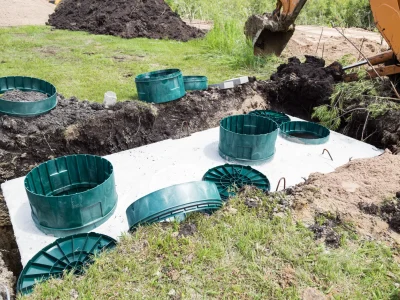

If you are researching a norweco singulair green Wantage NJ installation, you are probably dealing with one of three situations. You are building on a lot without access to public sewer. You are replacing an aging septic system that no longer meets code or no longer performs well. Or you own a property with difficult site conditions and need something more advanced than a conventional tank-and-field setup.
Those scenarios are common in northwest New Jersey. Wantage has the kind of geography that makes wastewater planning more than a paperwork exercise. Lot layout, slopes, seasonal groundwater, and soil limitations can all affect what can be approved and what will actually perform well over time. That is where a treatment unit like the Norweco Singulair Green often enters the conversation.
This system is not a magic box, and it is not the right answer for every parcel. But when the site demands higher treatment quality, a compact footprint, or a design that works with tighter constraints, it can be a practical solution. The key is understanding what the system does, what it does not do, how local approvals usually work, and what ownership looks like after the installation crew leaves.
Why homeowners in Wantage look at advanced treatment systems
A conventional septic system is simple in concept. Wastewater leaves the house, solids settle in a septic tank, and partially treated effluent moves to a disposal field where the soil does much of the finishing work. That arrangement can last a long time when the lot has deep suitable soil, enough separation from groundwater, and space for a properly sized field.
The problem is that many properties do not check all those boxes. In parts of Wantage, as in much of Sussex County, you may run into shallow soils, rock, wet areas, slopes, or lot layouts that leave little room for a large traditional disposal area. On older properties, setbacks from wells, property lines, streams, and structures can squeeze the usable area even further.
That is when engineers and installers start discussing advanced treatment units. The idea is straightforward. If you can treat the wastewater to a higher standard before it reaches the soil, you may be able to design a system that works better with site constraints, subject to local code and engineering approval. A Norweco Singulair Green system is one example of that category.
I have seen homeowners assume that “advanced” means “maintenance free” or “small enough to put anywhere.” It rarely works like that. Advanced systems can solve hard site problems, but they demand a little more planning, electrical coordination, and ongoing care. When that trade-off is understood from the beginning, owners tend to be much happier with the result.
What the Norweco Singulair Green system is designed to do
At a basic level, the Norweco Singulair Green is an aerobic treatment system. Instead of relying only on passive settling and soil treatment, it uses aeration and controlled treatment stages to reduce pollutants in the wastewater before final dispersal. That distinction matters because better treated effluent can expand design options where a basic septic tank alone may not be enough.
In practical terms, the system usually includes a treatment tank with internal process zones, mechanical or electromechanical components that support aeration and clarification, and controls that help manage operation. Depending on the approved design, there may also be a pump chamber, alarms, filters, and a dispersal method tailored to the site. The exact configuration is not one-size-fits-all. The engineer designs the full system around the home, the soil data, and the local rules.
Homeowners are often surprised by how much the performance of an advanced treatment system depends on steady daily habits. These units work best when wastewater loading is reasonably consistent. A family of four living full-time in the home creates a very different pattern than a weekend property that sits quiet for days and then gets hit with back-to-back laundry, long showers, and guests. That does not mean a part-time home cannot use one successfully, but it does mean the designer and service provider should understand the expected occupancy pattern from the start.
Why the system can make sense in Wantage NJ
The phrase norweco singulair green Wantage NJ usually comes up when someone has already learned that a conventional option may be difficult, expensive, or impossible on their lot. In that context, the system can make sense for several reasons.
First, advanced treatment can help when the site has limitations that call for better effluent quality before dispersal. Second, the overall footprint of the treatment portion can be more compact than some people expect, though the final field or disposal area still has to meet the approved design. Third, on replacement jobs, norweco singulair green Wantage NJ it may allow an engineer to work around existing constraints that make a traditional redesign awkward.
That said, the economics can shift from property to property. A basic septic system often wins on simplicity and long-term maintenance cost when the site supports it. An advanced system starts to look more attractive when the alternative involves major grading, imported fill, extensive site disturbance, or repeated attempts to make a marginal layout work. The best projects are the ones where the owner, engineer, and installer compare realistic options instead of jumping to the most complex design first.
What getting started actually looks like
The early phase is less glamorous than most homeowners expect. It usually begins with site evaluation, not product selection. Before anyone commits to a Norweco unit, the property itself has to be understood. Soil testing, percolation or hydraulic evaluation where required, grading review, well location, setbacks, and existing utility conflicts all matter.
In Wantage, as elsewhere in New Jersey, approvals typically involve local health oversight and a septic design prepared or supported by the right licensed professionals. The exact path depends on whether the project is new construction, a repair, a replacement, or part of a larger renovation. If there is one mistake I see repeatedly, it is owners shopping equipment before they know what the lot can legally and physically support.
A sensible first move is this short sequence:
- Have the site evaluated by qualified local professionals who understand septic work in Sussex County.
- Get a design recommendation based on soil conditions, house size, and property constraints.
- Confirm permitting requirements with the local authority before ordering equipment.
- Ask the installer and service provider how the system will be maintained after startup.
- Review the total cost, including installation, electrical work, service visits, and eventual pumping.
That process sounds basic, but it prevents expensive detours. I have watched projects lose weeks because a homeowner focused on the brand name while overlooking access issues for excavation or the need for a dedicated electrical connection.
Design details that matter more than the brochure
Brochures tend to focus on treatment performance, compactness, and environmental benefits. Those are real points, but what makes or breaks the installation is usually much more ordinary.
Elevation control matters. Wastewater has to move from the house to the treatment unit and then to the disposal area in a way that suits the terrain. If the lot forces pump-assisted movement, that adds equipment and operating considerations. Freeze protection matters too. In northern New Jersey, shallow piping and exposed components need careful design and installation so winter does not create a headache.
Access for service is another quiet issue that becomes important later. Lids and control components need to be reachable. A beautiful patio built over service access is the kind of decision people regret at the first maintenance visit. Electrical reliability matters as well. Advanced systems depend on powered components. If the home experiences frequent outages, ask early whether alarms, control protection, or backup planning should be part of the conversation.
Then there is water use. This is one of the least glamorous and most important parts of owning any septic system. A treatment unit can only process what it receives within its design assumptions. Long showers, leaking toilets, old softeners that regenerate too often, and marathon laundry days can overload a system that might otherwise perform very well. When I walk properties with owners, I often spend more time discussing plumbing fixtures and household habits than the treatment tank itself.
Permitting and local coordination in Wantage
Permitting language varies, and no one should rely on a generic online article as a substitute for local guidance. Still, the broad pattern is predictable. You will likely need an engineered design or a design prepared through the proper local process, review by the relevant health authority, and an installation performed by a qualified contractor. Inspections may occur at specific stages before backfilling or final approval.
What matters for the homeowner is coordination. If you are replacing a failed system, timing can be tight. If you are building new, you want the septic design aligned with the house placement, driveway, grading plan, and well location before everything else locks in. A slight shift in one feature can create setbacks or routing problems somewhere else.
In Wantage, where larger lots can give a false sense of freedom, I have seen owners assume they can place the home anywhere on the parcel and “fit septic in later.” The topography often says otherwise. A large lot is not the same as a simple lot.
Installation realities on a real property
The installation itself can be straightforward or surprisingly intricate depending on access and weather. Dry, norweco singulair green Wantage NJ accessible lots move faster. Tight access, wet ground, ledge, or heavy slope can slow everything down. If the contractor needs to protect lawns, manage spoils carefully, or work around mature trees, labor and equipment costs climb.
A professional installation usually includes excavation, tank setting, piping, electrical coordination, control setup, dispersal field or related discharge components as approved, startup checks, and site restoration. Restoration is worth discussing in plain terms before the contract is signed. “Restored” can mean anything from rough grade and seed to a more finished landscape repair. If the job is taking place near a driveway, retaining wall, or irrigation line, spell out who is responsible if those elements need temporary removal or repair.
One thing experienced installers do well is think two seasons ahead. A field that looks stable in August may behave differently during spring thaw. A route that seems easy for a machine on dry ground may become a rutting mess after two wet weeks. Good planning is not just code compliance. It is understanding how the site will behave after the crew is gone.
What ownership feels like after startup
Advanced treatment ownership is not difficult, but it is more involved than forgetting a buried tank exists. You will likely have routine inspections or service visits, periodic pumping based on use and solids accumulation, and occasional replacement of certain wear components over the years. There may also be alarms or indicators that notify you if the system needs attention.
This is usually where initial homeowner attitudes matter. People who accept the system as part of the home’s mechanical infrastructure, no different in principle from a boiler or well pump, adapt quickly. People who expect never to think about it tend to get frustrated by normal service needs.
The good news is that a well-installed and properly maintained system can be very dependable. The bad news is that neglect shows up faster on advanced systems because the equipment is doing active work. If an air delivery component fails or a control issue goes unnoticed, you do not want to discover it months later.
A practical ownership mindset includes a few habits:
| Habit | Why it matters | |---|---| | Respond promptly to alarms | Early action prevents bigger service issues | | Keep records of service and pumping | Good records help with troubleshooting and property resale | | Control water surges | Steady flow supports better treatment | | Avoid flushing inappropriate materials | Wipes, grease, and harsh misuse create unnecessary problems | | Protect access points | Service should not require digging up landscaping |
That is not an exhaustive list, but it captures the basics that make ownership smoother.
Costs, and why simple comparisons can mislead
Homeowners naturally ask, “What does a Norweco Singulair Green system cost in Wantage?” The honest answer is that the system price alone does not tell you much. Septic projects are site projects. The treatment unit is only one part of the budget.
The total cost can be influenced by excavation complexity, import or export of material, electrical work, pumping needs, length of pipe runs, control setup, restoration, engineering, permit fees, and the type of dispersal field approved. On some parcels, the treatment unit is not the main cost driver at all. Site work is.
Operating cost also deserves attention. An advanced aerobic system uses electricity and needs routine service. Those recurring costs are part of the ownership picture, just as pumping remains part of the picture with conventional systems. It is often better to compare the five-year or ten-year ownership path rather than just the installation invoice.
I have seen two common budgeting errors. The first is underestimating restoration and access-related work. The second is forgetting that a more affordable bid is not always a cheaper project if service support is weak or the installation details are sloppy. On wastewater systems, the cheapest shortcut has a habit of resurfacing at the worst possible time.
Questions worth asking before you hire anyone
The quality of the team matters as much as the equipment. Some contractors are strong at earthwork but weak on controls and startup. Some understand advanced treatment well but are thin on communication. You want a group that can handle both the installation and the practical realities of service in your area.
Ask who will be responsible for startup, owner orientation, and follow-up service. Ask whether the installer has direct experience with Norweco systems rather than treating this job like a first attempt. Ask how emergencies are handled, especially if an alarm occurs on a weekend or in winter. And ask what parts of the project are subcontracted, because electrical and control coordination can become blurry when several trades overlap.
A homeowner once told me the most valuable question they asked was not about price. It was, “When this system needs attention three years from now, who actually picks up the phone?” That is the right instinct.
Common mistakes that create avoidable trouble
Most system problems are not dramatic engineering failures. They are small, cumulative decisions that chip away at reliability. Landscaping over access lids, sending sump or roof drainage toward the system area, planting thirsty trees too close, ignoring a running toilet, or treating the system like a garbage disposal all create avoidable stress.
Another common mistake is making major household changes without considering wastewater load. Finishing a basement into guest quarters, adding bedrooms, or converting a seasonal home into a full-time residence can change the demand profile enough to matter. The septic system was approved for a specific design use. When the use changes, it is wise to ask whether the system still matches the home.
If you are buying a property with this type of system already in place, do not stop at a basic visual check. Ask for service records, pump-out history, permit documents, as-built information if available, and details about who has been maintaining it. A clean yard tells you almost nothing about the condition of the treatment components.
Is a Norweco Singulair Green the right fit for your property?
Sometimes yes, sometimes no. If your lot in Wantage has favorable soils, generous separation, and room for a conventional system, you may not need an advanced treatment unit at all. Simpler systems have a lot going for them when they are feasible. But if the property has constraints that make standard septic design difficult, or if the engineer identifies a clear benefit to higher pretreatment, the Norweco Singulair Green can be a strong candidate.
The best decisions usually come from a grounded comparison. Look at what is approvable. Look at what fits the site with reasonable disturbance. Look at what the long-term service picture will be. And look at your own tolerance for active system ownership. If you want a set-it-and-forget-it mindset at all costs, an advanced unit may not be your favorite relationship. If you value a practical solution to a difficult lot and are willing to maintain it properly, the system can serve very well.
For anyone searching specifically for norweco singulair green Wantage NJ, the smartest next step is not chasing the lowest advertised number or the flashiest product sheet. It is assembling the right local professionals, verifying the site conditions, and designing from the ground up. Wastewater systems reward realism. When the planning is honest and the installation is careful, the results are usually far better than the stress people fear at the beginning.
Excavating New Jersey LLC
406 County Rd 565
Wantage, NJ 07461, United States
Phone: +1 (973) 791-4284
FAQ About norweco singulair green Wantage NJ
How does a Norweco septic system work?
Singulair Green uses aerobic biological treatment in a polyethylene tank, followed by settling and filtration. The treatment unit is one part of a complete wastewater system; the site design also determines how treated effluent is dispersed.
How much does a Norweco septic system cost in NJ?
A useful estimate requires a property evaluation. Excavation access, soil conditions, engineering, electrical work, the disposal field, and restoration can affect the total. Ask Excavating New Jersey LLC for a written scope that distinguishes installation costs from ongoing service costs.
Are Norweco septic systems good?
Singulair Green is an established aerobic treatment option, but suitability depends on the property and proposed design. Compare the model's documented performance, maintenance needs, and total project scope with alternatives before deciding.