Top Benefits of Choosing Norweco Singulair Green in Wantage NJ
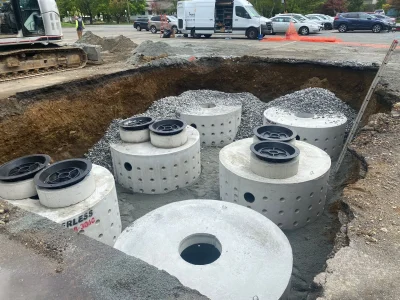
Homeowners in Wantage tend to think about wastewater only when something goes wrong. That is usually how it starts: a wet patch in the yard that never seems to dry, a drain line that gurgles at the wrong time, or a septic tank that suddenly needs attention far sooner than expected. In a part of New Jersey where many homes rely on onsite wastewater treatment, the system under the ground matters every bit as much as the roof overhead or the boiler in the basement.
That is why the conversation around norweco singulair green Wantage NJ comes up so often among property owners, builders, and septic professionals. The Singulair Green system is not just a tank with a different label. It is an advanced residential treatment system designed to treat wastewater to a higher standard than a conventional septic setup in many applications. For the right property, that changes what is possible on the site, how the yard can be used, and how much confidence a homeowner has in the system over the long run.
The strongest case for choosing one in Wantage is not based on hype. It is based on fit. Rural and semi-rural properties in Sussex County often present real site constraints. Some lots have limited usable area. Some have challenging grades. Some have soils that do not make life easy for a standard septic design. Others are older homes where replacement options are tighter than people expect. In those situations, advanced treatment can open doors that a basic system cannot.
Why Wantage homeowners often need more than a standard approach
A conventional septic system depends heavily on the soil to finish the treatment process. Wastewater leaves the septic tank, then moves into a disposal area where the surrounding soils provide the final polishing. When the soil conditions are favorable and the lot has room, that can work well. When conditions are less forgiving, the margin for error shrinks.
In Wantage and the surrounding area, one property can be very different from the next. You may find sandy sections, tighter soils, wet seasonal conditions, sloping terrain, rock closer to grade, or a layout constrained by wells, property lines, driveways, and existing structures. Older homes can be especially tricky because what worked decades ago may not meet present expectations or current design realities.
That is where an advanced treatment unit earns its keep. By treating wastewater more thoroughly before it reaches the disposal field or other dispersal component, it reduces the burden placed on the soil. That can be a major advantage on difficult sites, and it often translates into more design flexibility.
What the Singulair Green system is really offering
The Norweco Singulair Green is generally understood as an aerobic treatment system. In practical terms, that means it uses oxygen and a controlled treatment process to break down wastewater more aggressively than a passive tank alone. That difference matters. Better treatment up front can mean clearer effluent, lower organic loading to the dispersal area, and improved overall system performance when the system is designed, installed, and maintained correctly.
People sometimes assume these systems are only for large custom homes or unusual projects. In the field, the picture is broader. They can make sense for new construction on constrained lots, replacement systems where options are limited, or homes where the owner wants a more advanced wastewater solution than a conventional tank-and-field arrangement.
The appeal is not that it is flashy. It is that it is engineered. A system like this introduces more control into a part of the property that is usually left to chance.
Better treatment quality at the source
One of the clearest benefits is improved treatment before the water ever reaches the soil absorption area. That is the heart of the value proposition.
A standard septic tank is primarily a settling and separation vessel. Solids sink, grease floats, and partially clarified wastewater moves on. Useful, yes, but limited. An aerobic treatment system goes further by supporting biological treatment in a more active way. That helps reduce the concentration of pollutants leaving the unit.
For homeowners, the effect is not always visible day to day, but it matters. Cleaner effluent can support better performance in downstream components. On a practical level, that may help protect the investment in the dispersal field, which is often the most expensive and site-sensitive part of the whole system.
This is especially relevant on properties where the replacement of a failed field would be difficult, disruptive, or very costly. Anyone who has had to rework grading, remove mature landscaping, or redesign a yard around a septic replacement understands that the disposal area is not something you want to stress unnecessarily.
A strong option for difficult lots
If there is one reason advanced treatment systems gain traction in towns like Wantage, it is site limitation. Plenty of rural homeowners discover that the issue is not whether they want a premium wastewater system. The issue is whether the lot gives them any easy alternative.
When an engineer or septic designer evaluates a property, they are looking at more than bedroom count and square footage. They are looking at how the site behaves. Setbacks from wells, streams, and property lines matter. Slope matters. Seasonal groundwater conditions matter. So does available separation distance and room for future reserve areas, depending on local requirements and the design approach.
On a straightforward, roomy site with favorable soils, a conventional system may be entirely appropriate. But a lot of properties are not straightforward. In those cases, the norweco singulair green Wantage NJ conversation becomes practical very quickly. Better-treated effluent can support designs that would otherwise be hard to achieve or impossible to permit using only basic treatment.
That does not mean every difficult lot automatically calls for this exact system. It does mean advanced treatment gives designers more tools. In septic work, more tools often means better outcomes.
Smaller footprint potential and better use of property space
Space is one of the most underestimated parts of septic planning. Many homeowners picture the tank and forget the area beyond it. The field, reserve area, setbacks, and access needs can shape the entire backyard.
One benefit often associated with advanced treatment is the potential for a more efficient overall design, depending on the site and the approved engineering approach. Because the wastewater is treated more thoroughly before dispersal, the downstream system may sometimes be designed in a way that uses site area more effectively than a conventional approach would on the same lot.
That matters on parcels where every usable section competes with something else. A homeowner may want space for a garage addition, a pool, a play area, a garden, or simply a yard that is not dominated by septic constraints. Better treatment can help preserve options.
I have seen property owners assume their dream addition is dead because the existing septic layout consumes the only flat section of yard. Then the design team evaluates an advanced treatment alternative and suddenly the project is back on the table. Not every site works out that way, but when it does, the wastewater system stops being an obstacle and starts being part of the solution.
Useful for replacement projects on older homes
Replacement work is where these systems often prove their value. New construction gives everyone a clean slate. Existing homes rarely do.
Older homes in and around Wantage can present a frustrating combination of realities. The house may predate current expectations. The lot may have limited open area. Mature trees, old patios, sheds, retaining walls, or driveway expansions may have eaten up the easy space over time. Then a failing septic system forces a redesign under pressure.
In those cases, a conventional replacement may be difficult to fit without major disturbance or compromises. Advanced treatment systems can provide a path forward where the site needs a more refined design. They may help reduce the intensity of impacts on the property and, in some cases, preserve features the owner would rather not tear out.
That alone can justify a closer look. Replacing a septic system is never anyone’s favorite project. If a better treatment system reduces the amount of hardscape removal, tree loss, or yard reconstruction, that is a real-world benefit, not a theoretical one.
More environmental protection where it counts
In a rural community, environmental protection is not an abstract talking point. It connects directly to private wells, local streams, neighboring properties, and the long-term health of the land itself.
An advanced residential treatment system is designed to do more of the cleaning before discharge to the disposal area. That can support better environmental performance than a simpler primary-treatment-only setup in many applications. For homeowners who take stewardship seriously, that matters.
It also matters socially. Septic issues rarely stay neatly within one property line. Poorly treated wastewater can contribute to odors, surfacing effluent, saturated areas, and conditions that create tension with neighbors. Cleaner treatment helps reduce the odds of those visible and unpleasant failures.
Wantage residents often value privacy and self-reliance, but those values come with responsibility. Choosing a system that treats wastewater more thoroughly is one way to meet that responsibility in a meaningful way.
Performance that suits full-time homes
Vacation properties and lightly used homes have one wastewater profile. Full-time family homes have another. Laundry, showers, dishwashers, guests, changing schedules, and seasonal occupancy patterns all affect how a septic system performs.
A well-designed treatment unit like the Singulair Green is intended for residential use where consistent, reliable treatment is the goal. That can make it attractive for households that want a system built around steady performance rather than minimum compliance.
Of course, no wastewater system is indestructible. If people flush wipes, grease, hygiene products, or harsh chemicals, even a sophisticated system will suffer. But under normal residential use, the benefit of a more controlled treatment process is that the system is not relying solely on passive settling and the hope that the field can absorb everything downstream.
That difference tends to show up over time. Better treatment often means the system is asking less of the soil day after day, year after year. In wastewater, long-term strain is what shortens service life.
A good fit for homeowners who plan to stay
One of the most important questions in septic planning is how long the owner expects to keep the home. If someone is planning to move very soon, they may focus on immediate compliance and basic functionality. If someone plans to stay for ten or twenty years, the calculation changes.
Long-term owners usually think differently. They care about reliability, serviceability, site protection, and whether the next repair will be modest or major. They know that cheaper up front can become expensive later if the system struggles or the dispersal area degrades prematurely.
Choosing an advanced system is often part of that long-view mindset. The upfront cost may be higher than a simple conventional setup, and that should be acknowledged honestly. But homeowners who stay put often care less about lowest first cost and more about lifecycle value.
That is a sensible way to think about wastewater. A septic system is not a cosmetic upgrade. You do not install it for curb appeal. You install it so the house functions properly, the site remains healthy, and you avoid the kind of failure that forces emergency decisions.
The trade-off: better treatment comes with maintenance
This is where a candid discussion matters. A Norweco Singulair Green system is not a set-it-and-forget-it tank in the way some homeowners imagine a conventional septic system to be. Advanced treatment units have mechanical and biological components that need periodic professional attention.
That is not a flaw. It is the price of better performance.
Homeowners considering this route should expect routine service and monitoring as part of responsible ownership. The system may include components such as aeration equipment, controls, and other features that need inspection and occasional replacement over the years. Many owners are comfortable with that because they already maintain wells, water treatment equipment, boilers, sump systems, and generators. This is simply another important system in the house ecosystem.
A fair way to look at it is this: a conventional system often appears simpler, but it can become unforgiving on marginal sites. An advanced system asks for more attention, but it gives back more control. For many Wantage properties, that is a worthwhile exchange.
What homeowners should ask before choosing one
The right wastewater decision always begins with the site and the design team. Before committing to any treatment technology, homeowners should get clear on a few practical issues:
- whether the lot constraints genuinely call for advanced treatment
- how the system will be serviced over time
- what local approvals and design requirements apply
- how the proposed layout affects future yard use
- what the realistic installation and long-term ownership costs look like
Those questions can save a lot of frustration. Not every installer has the same level of experience with advanced treatment systems, and not every property benefits equally from them. The best outcomes usually come when the homeowner, designer, installer, and service provider are all aligned from the beginning.
Installation quality matters as much as the equipment
A strong product cannot rescue weak installation work. That is true in heating, roofing, well systems, and especially septic.
When evaluating a norweco singulair green Wantage NJ Singulair Green installation, the details matter. Tank placement, elevations, piping layout, electrical work, ventilation, access for future service, and proper startup all affect how the system performs. The downstream dispersal component matters too. Even excellent treatment equipment needs the rest of the system to be designed and built correctly.
Homeowners should pay attention to who is responsible for each stage. In some projects, the engineer, installer, electrician, and service provider are all separate parties. Coordination is critical. A small oversight during installation can create a recurring nuisance later, and wastewater systems are not the kind of thing most people want to troubleshoot in January.
The best contractors tend to talk plainly about these issues. They do not oversell. They explain what the system does well, what maintenance it needs, and what owner habits will help or hurt performance.
Day-to-day living with an advanced treatment system
Once the system is in the ground and running properly, daily life should feel normal. That is one of the advantages homeowners appreciate most. There is no benefit in installing a sophisticated wastewater system if it makes the house harder to live in.
Good habits still matter. Water use should be sensible, not extreme. Leaks should be fixed promptly. Non-flushable items should stay out of the drains. Strong solvents, paints, and inappropriate chemicals should not be introduced into the system. Those are smart practices for any septic system, but they become even more important when the treatment process is engineered and biologically active.
For most households, the transition is easy. The system is not asking for constant attention. It is asking for respectful use and scheduled service. In return, it provides a level of treatment that can make a difficult site workable and a valuable property more secure.
Why the local context in Wantage changes the decision
A wastewater system that looks unnecessary in a suburban neighborhood on large, forgiving lots may look very sensible in Wantage. Local context changes the equation.
This is an area where private infrastructure is part of everyday homeownership. Many residents manage wells, septic systems, drainage concerns, and winter weather realities without public utility backups. People here understand that infrastructure decisions are not theoretical. They shape repair costs, property use, and resale confidence.
That is one reason the phrase norweco singulair green Wantage NJ is more than a search term. It reflects a local pattern of need. Properties in this area often reward thoughtful, engineered wastewater solutions because site conditions can be demanding and the cost of getting it wrong is high.
For a homeowner facing a new build, a major renovation, or a septic replacement on a constrained lot, the benefits are straightforward. Better treatment, more flexibility, stronger environmental performance, and improved confidence in long-term operation all carry weight. The system is not the answer for every parcel, but where conditions justify it, it can be a very smart choice.
When it tends to make the most sense
There are certain situations where this type of norweco singulair green Wantage NJ system tends to stand out. A few come up repeatedly in practice:
- the lot has limited usable septic area or difficult soil conditions
- an older home needs a replacement system with minimal site disruption
- the owner wants stronger treatment performance for long-term stewardship
- the project includes additions or site improvements that compete for yard space
- preserving the downstream disposal area is a major priority
That last point deserves emphasis. The disposal area is where many septic budgets go to die. If improved treatment upstream helps support the health and longevity of that part of the system, the value can extend well beyond the initial installation.
For homeowners in Wantage who are weighing options carefully, that is often the deciding factor. They are not just buying a tank. They are protecting the usability of their land and reducing the chance that wastewater becomes the property’s weak link years down the road.
Excavating New Jersey LLC
406 County Rd 565
Wantage, NJ 07461, United States
Phone: +1 (973) 791-4284
FAQ About norweco singulair green Wantage NJ
How does a Norweco septic system work?
Singulair Green uses aerobic biological treatment in a polyethylene tank, followed by settling and filtration. The treatment unit is one part of a complete wastewater system; the site design also determines how treated effluent is dispersed.
How much does a Norweco septic system cost in NJ?
A useful estimate requires a property evaluation. Excavation access, soil conditions, engineering, electrical work, the disposal field, and restoration can affect the total. Ask Excavating New Jersey LLC for a written scope that distinguishes installation costs from ongoing service costs.
Are Norweco septic systems good?
Singulair Green is an established aerobic treatment option, but suitability depends on the property and proposed design. Compare the model's documented performance, maintenance needs, and total project scope with alternatives before deciding.